A series within the notebook: walks that follow walls, written up with enough detail to plan something similar on your own ground.
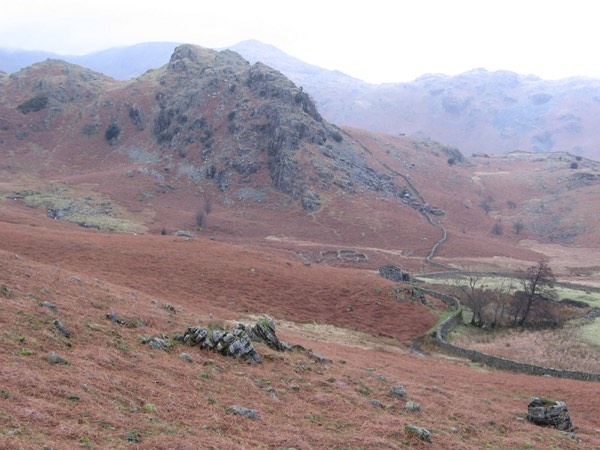
Fells in the Lake District in late autumn, with walls along the valley floor.
None of these come with turn-by-turn directions. Some of the walls are on working farms, and the best of what grows on them is easily damaged, so I describe the kind of route rather than the exact one. Every walk here is on public rights of way or open access land. A large-scale map, decent boots and a willingness to stop every few minutes are the only real requirements.
A few habits I try to keep: close gates, use stiles rather than walls, keep dogs on a lead near sheep, and never take stones, moss or anything else home.
A circular walk of about seven miles following the wall that divides the farmed valley from the open fell, and what the wall changes into along the way.
Distance
About 7 miles (11 km)
Time
A full day at wall-watching pace
Ground
Bridleway, one boggy section, valley-bottom riverside path
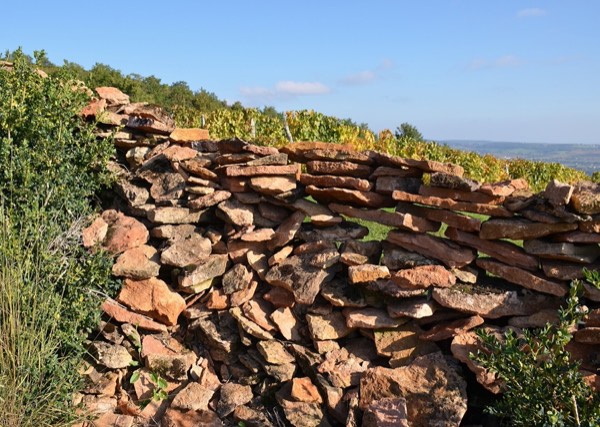
Dry stone walls are not a northern English speciality. Notes on walls from karst plateaus, mountain terraces and the far west of Ireland, from travels and from reading.
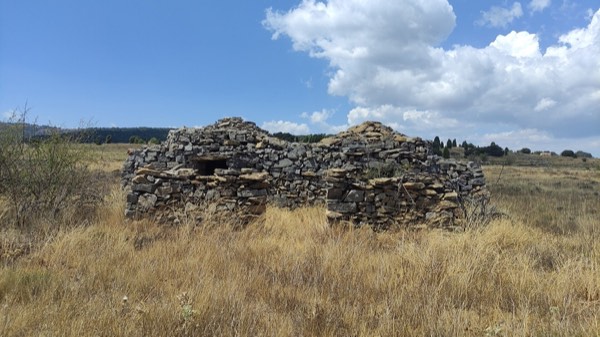
The small stone enclosures and shelters that sit among field walls: sheepfolds for gathering, pinfolds for strays, and curved walls built only to break the wind.
Distance
Several short walks, 3 to 6 miles each
Time
Half days
Ground
Open access fell and village lanes
Best
Late summer, when the folds are dry underfoot
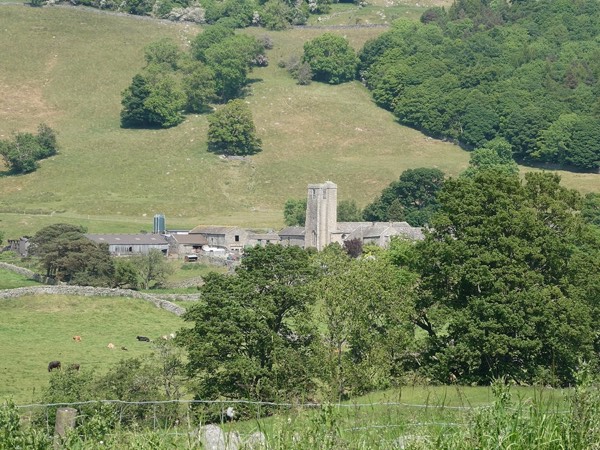
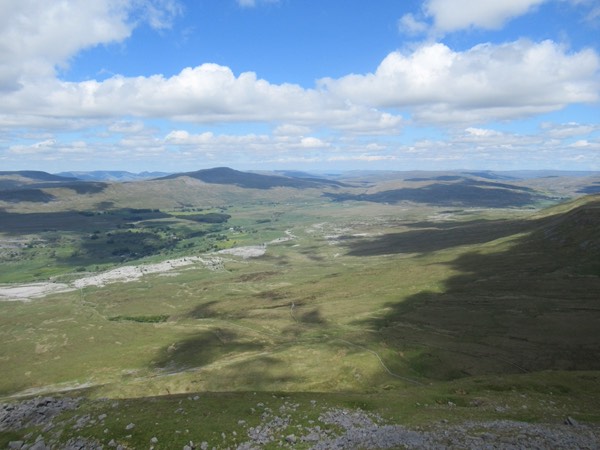
The view from Ingleborough in the Yorkshire Dales. Most good wall walks end somewhere like this.