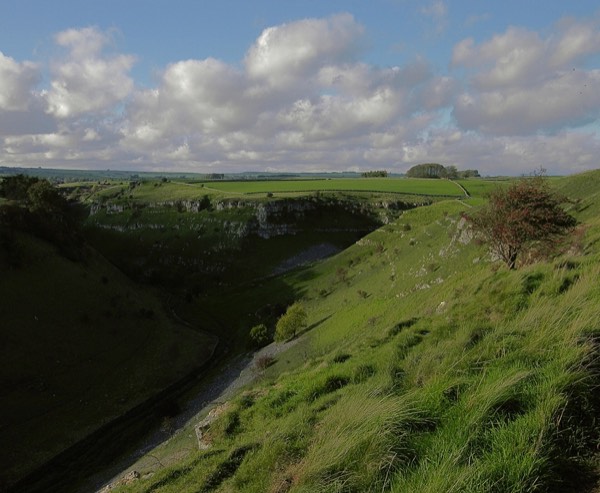
Walks
Barns and walls in the upper dale
A late-summer walk through a valley of small walled meadows, each with its own stone barn, and the farming system that made that pattern.
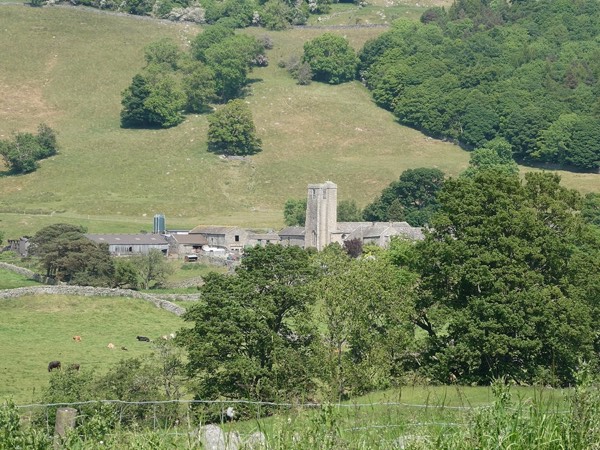
Some landscapes are famous for their walls, and the upper part of one of the northern dales is famous for walls and barns together. Every small meadow has a stone barn in it, sometimes in a corner, sometimes built into the wall itself, and from the hillside above the pattern looks like a board game: green squares, grey lines, and a small grey block in nearly every square.
I went at the start of September, after the hay was in, on a walk I had been saving for a year.
The pattern
The barns are field barns, sometimes called cow houses, and they come from a farming system that has mostly gone. Hay was cut in each meadow in summer and stored in the upper part of that meadow’s barn. In winter, cattle were kept in the lower part of the barn, fed on the hay stored above them, and their muck was spread back on the same meadow in spring. Each field fed its own animals in its own building. It meant the hay never had to be carted far, which in a steep valley with poor tracks must have mattered a great deal.
The walls, then, are not just boundaries but the frame of the whole system: small fields, each with a barn, a gateway, and a muck heap that went back on the grass. You can see some barns with a small square opening high in the gable, a forking hole, where hay was pitched in from a cart outside.
The walk
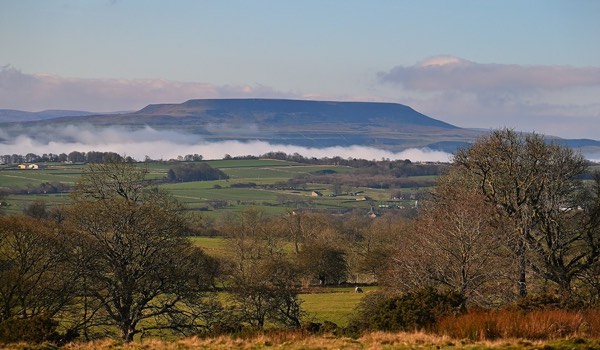
I parked at the village at the head of the dale, early, and took the path that runs through the meadows on the valley floor. It is a flagged path in places, with narrow squeeze stiles between almost every field, so you go through a little stone gap, across a meadow, through another gap, perhaps twenty or thirty times in a couple of miles. Single file is strongly encouraged by signs, because the meadows are still cut for hay and trampled grass cannot be mown.
In June these meadows are famous for their flowers. In September they are short and pale green after the cut, which is less spectacular but makes the walls stand out better. The rest of the route climbed up onto the side of the valley on an old green lane between two walls, and then came back along a terrace path with the whole board game laid out below.
About eight miles. The squeeze stiles in the meadows are tight; I took my rucksack off for several of them.
Walls up close
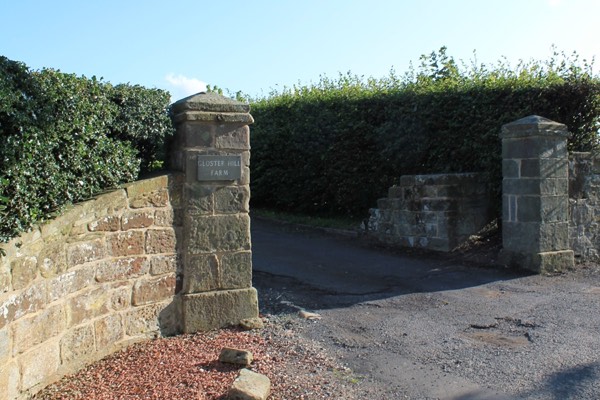
The meadow walls are lower and lighter than the big intake walls higher up, built of stone picked from the fields and the river. Many of them have throughs sticking out in a neat row on both sides, and several have stone stiles built straight through them, with three long steps up and three down. Gateways have big stone gateposts, often with holes cut in them where wooden rails were once slotted in before there were hinged gates.
On the barns themselves the stone is better dressed, and the roofs are heavy stone slates. A good number of the barns are roofless or falling in, because there is no longer a use for them; cattle are wintered in big modern sheds now. Some have been repaired with grants, some converted, and quite a few are simply being allowed to go. It is odd to stand in a meadow and see a barn with its roof slates slipping, sheltering nothing but a few nettles.
Mosses and a bird
The south-facing meadow walls were mostly grey with lichen and studded with Grimmia cushions. One wall along the river had thick feather-moss on its shaded side and a dipper bobbing on a stone at the bottom of it, which I am including in the notebook even though it is neither a wall nor a moss. On a barn’s north wall there was a long streak of bright orange lichen running down from a gap in the eaves, where birds must have been nesting and adding their own fertiliser for years.

What I wondered about
How many hours went into all this? Every wall in the valley was built and rebuilt by hand, and every barn too, and the whole pattern was kept up for centuries by families farming a few dozen acres each. Standing on the terrace path at the end of the day, looking down at hundreds of small fields, I could not begin to do the sum.