Walls & walling
Holes on purpose: smoots, creeps and cripple holes
Not every gap in a wall is a failure. Some were built in deliberately, for water, for hares, for sheep, and occasionally for reasons nobody quite remembers.
After a year of counting collapsed gaps, it was a relief to start noticing the holes that are meant to be there. Field walls are full of them once you look: small square openings at the base, larger rectangular ones with a heavy lintel stone across the top, and narrow slits where a stream runs underneath. Each has a purpose, and each has several local names, which vary so much between valleys that I have stopped trying to be consistent.
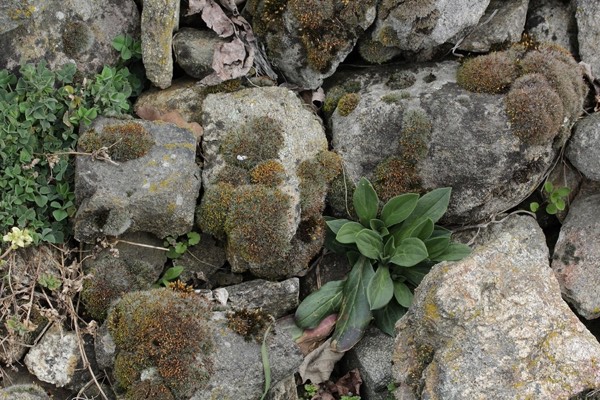
Water smoots
The simplest are the openings that let water through. A wall built across a slope acts as a dam for surface water, and a wall built across a stream would simply be washed away. So where the wall crosses a drain or a small beck, the builders left a gap at the bottom, bridged with a long flat stone, and built the wall on over it.
The bigger ones are small culverts with built sides, and some have a hanging grill of wooden rails or an iron gate to stop sheep crawling through when the water is low. In very wet weather you can stand by one and watch a surprising amount of the hillside drain through a hole the size of a bread bin.
Rabbit and hare smoots
Smaller holes, sometimes no bigger than a fist and a half, were left at ground level in some walls so that hares and rabbits could pass. One story is that they were built so that the animals would funnel through a predictable gap, where a snare or a net could be set on the other side. I have read this in several places, from people who seem to know, and it fits the shape of the holes, so I am inclined to believe it. It also means the holes were a convenience for the person with the snare rather than a kindness to the hare.
Sheep creeps
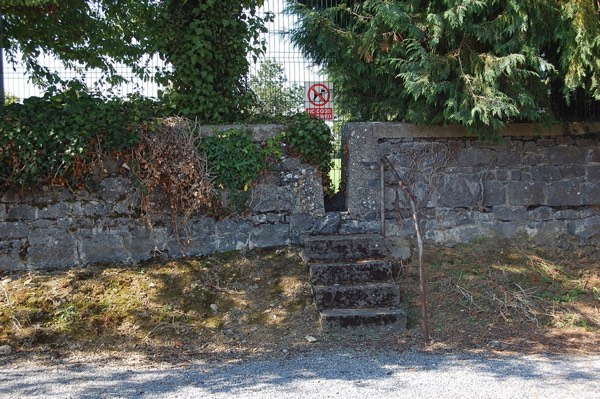
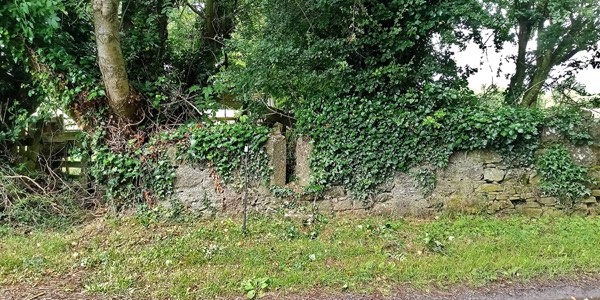
The largest of the deliberate holes are sheep creeps, also called hogg holes in some places and lunky holes in Scotland. They are rectangular openings at the base of the wall, roughly knee height and a bit wider than a sheep, with a big lintel stone across the top carrying the wall above. They let the farmer control the movement of sheep between two fields or between the fields and the fell. Open the creep, and the flock can drift through to fresh grazing. Close it, and the wall is whole.
Closing it is the interesting part. Most creeps I have seen are blocked with a large flat stone leaning against the opening, or a slab slotted in vertically, or, these days, a sheet of corrugated iron or an old pallet wired into place. On a few, the blocking stone has clearly not been moved for decades and has a full cover of lichen matching the wall around it, which tells you how long ago the system fell out of use.
Some people say the openings were sized so that ewes could pass but not cattle, or young sheep but not adult rams. I suspect the truth is that they were whatever size the builder could manage with the lintels he had.
Bee boles and other niches
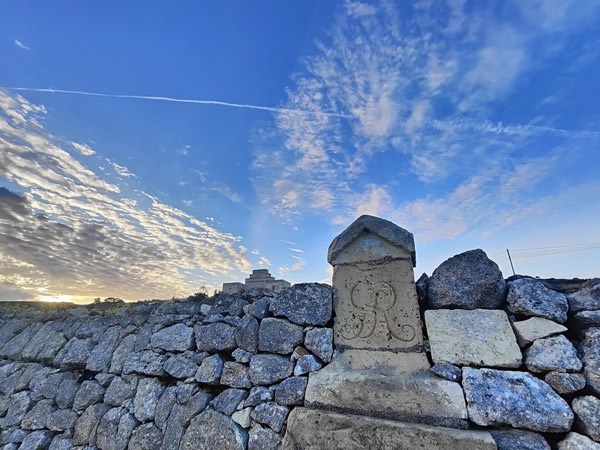
Occasionally you find a niche that does not go right through the wall: a square recess in the face of a wall near a farmhouse, often facing south, sometimes several in a row. These are often bee boles, shelters for the straw skeps that people kept bees in before modern hives. There is a register of them in Britain, which I find delightful in itself, a list of holes in walls kept by people who care about holes in walls.
I have only seen two that I am confident about. Both were in garden walls of old farmhouses, not field walls, and both were empty.
Gaps that are not holes
Finally there are the gaps that are meant to be walked through rather than crawled through: the stiles, the gateways, and on some old routes a stone slab stood upright in the gap, a kind of low step you can climb over that a sheep will not. I wrote about those back in June. The most memorable variation I have seen was in a valley on the west coast of Ireland, where whole stretches of the wall had been built as a gap filled loosely with stones, so the farmer could take the gap down by hand to let cattle through and build it up again afterwards. A temporary gate made of the wall itself.
Reading the holes
Once you know these features, they tell you about the farming that went on around a wall. A row of creeps along an intake wall means sheep were moved regularly between fell and inbye. A water smoot that is now dry means a stream has moved or been drained. A blocked creep with an old lichen cover means a practice abandoned before living memory. The holes are small, but they are where the people show through.