Walls & walling
Starting a wall notebook
Why I have started keeping notes on dry stone walls, the things that live on them, and the walks that follow them.
For about three years I have been walking the same handful of field walls above the town, and for about three years I have been meaning to write some of it down. The trouble with walls is that they look finished. You pass one, and it seems to have been there forever and to be going nowhere, and so you never quite get round to looking at it properly. Then one February a stretch you have walked past two hundred times comes down in the night, and you realise you cannot remember what it looked like standing up.
So this is a notebook. It is mostly for me, partly for anyone else who stops at a gateway and finds themselves staring at the top of a wall for longer than is strictly sensible.
What I mean by a wall
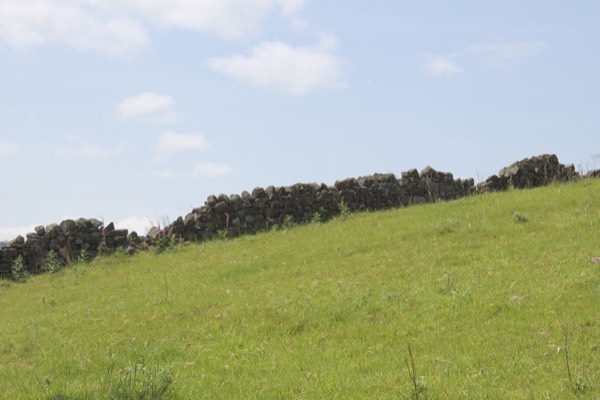
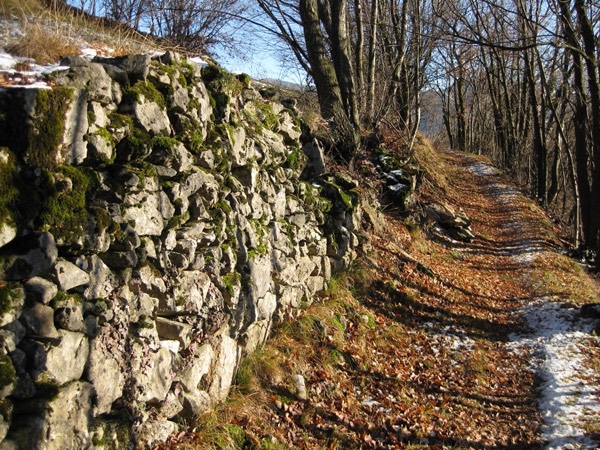
When I say wall here I nearly always mean a dry stone wall: stones laid without mortar, held up by their own weight, by friction, and by the way they have been fitted together. Two faces leaning slightly inwards, a fill of small stones between them, long stones laid through the middle to tie the faces together, and a row of copes along the top. Most of the walls I know are field walls, built to keep sheep and cattle where someone wanted them, and to use up the stone that came out of the ground when the land was cleared.
They are not ornaments, and they are not ruins. Most are still doing the job they were built for, which is one of the reasons I like them. A wall that is still holding sheep in is a working thing, and working things get repaired, patched, gapped and rebuilt, and each of those leaves a mark you can learn to read.
What lives on them
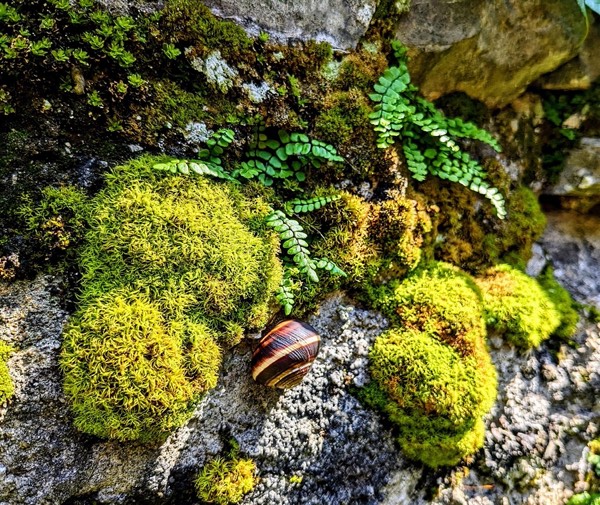
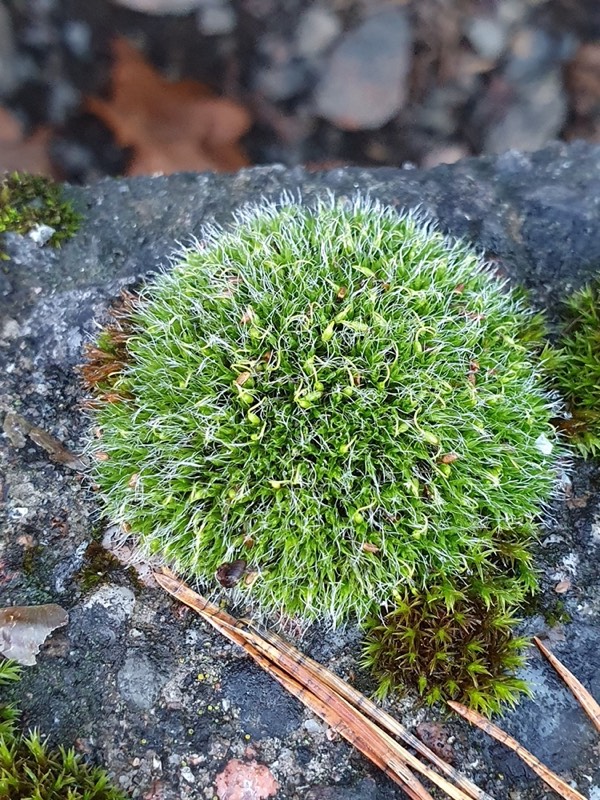
The other half of the notebook is about the small life on the stones. A wall is a long, thin, north-and-south-facing cliff, and it collects the things that like cliffs: mosses in cushions and mats, lichens in crusts and rosettes, ferns that root in the joints, and a few flowering plants that have learned to live on almost nothing. The south face of a wall can be a different country from the north face, a metre away. The copes, which catch the rain and the bird droppings, are different again from the shaded footings.
I am not a botanist. I have a hand lens, two field guides, a habit of getting names wrong, and a friend in the local natural history group who corrects me kindly. Where I am unsure of a name I will say so. Where I am sure, I will probably still be wrong now and then, and I will put corrections at the bottom of the post rather than quietly changing things.
A note on the photographs
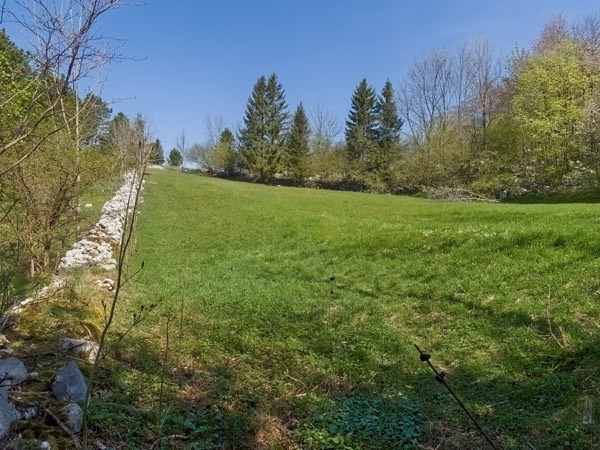
I am a poor photographer. My phone pictures of moss are mostly green smears with a thumb at the edge. Most of the photographs on this site are therefore not mine. They come from photographers who have put their work into the public domain, through Wikimedia Commons, and every one of them is listed on the credits page with a link to where it came from. I have tried to choose pictures that show what I am writing about, even when they were taken a long way from my own hills. A wall in Slovenia and a wall in Cumbria have more in common than either has with a garden fence.
How this will go
I expect to write roughly once a month, more in spring and autumn when there is more to look at, less in high summer when the bracken is up and I would rather be out than at a keyboard. Some posts will be walks, with enough detail that you could follow a similar route on your own ground. Some will be about one plant or one lichen. A few will be about mending walls, which I have started learning to do, slowly and with a good deal of help.
The walks will all be on public paths or open access land. I will not say exactly where every wall is, partly because some of them are on working farms and partly because I would like the best patch of rustyback fern I know to stay where it is.
If there is a theme, it is slowness. A wall takes a day to build a few metres of, and a century to settle. A lichen on a cope stone might grow a millimetre a year. A moss cushion dries to grey in a sunny afternoon and turns green again within minutes of rain. None of this is visible at walking pace. You have to stop.
That is the plan, anyway. The first proper post will be about the parts of a wall, because once I knew the names of the parts I started seeing them everywhere.
— Maren